About Us
Contrary to popular belief, Lorem Ipsum is not simply random text. It has roots in a piece of classical Latin literature from 45 BC, making it over 2000 years old.
Contrary to popular belief, Lorem Ipsum is not simply random text. It has roots in a piece of classical Latin literature from 45 BC, making it over 2000 years old.
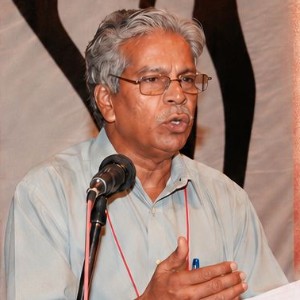
D. Thankappan (6 May 1939 – 2 September 2026)
Experience
Email Address
Phone Number
Fax
D. Thankappan was a veteran trade unionist and labour rights leader whose seven-decade journey shaped India's working-class movement. Born into a middle-class family on the outskirts of Thiruvananthapuram, he was drawn to left-wing student politics early on, and after facing rustication for protesting the dismissal of the first Left Front government, he relocated to Mumbai the city that became his lifelong base.
In his early years in Mumbai, he worked under Com. Sunder Nawalkar with unions affiliated to the UTUC, learning stenography as a union office secretary before joining the Kamani Engineering Corporation (KEC) in 1964. He rose quickly through the Kamani Employees' Union (KEU), becoming its General Secretary in 1966 and playing a central role in shaping collective bargaining norms and wage-setting frameworks in the country.
Through the militant labour movements of the 1970s, the Mumbai textile strike of 1981, and the trade union split that led to the formation of CITU, Thankappan steered the KEU through turbulent decades while holding firmly to the principle that trade unions must remain independent of both employers and political parties. In 1988, he was central to the Kamani Tubes workers' cooperative takeover, a landmark Supreme Court decision that advanced working-class ownership models. In 1991, he founded the Centre for Workers' Management to help unions across the country navigate corporate bankruptcies, and in 1995 he helped form the National Centre for Labour to unite organised and unorganised sector workers.
His most enduring institutional legacy came in 2006, when he helped found the New Trade Union Initiative (NTUI), bringing together unions across the political spectrum under a shared vision of unity, democracy, and militancy. He served the NTUI as both Vice President and President, lending it a political weight and credibility few others could have brought.
Beyond his union roles, Thankappan saw himself as an activist and worker-educator mentoring generations of activists, championing women's leadership in the movement, and believing that no struggle, however small, was without significance.
Volunteers are the backbone of many charitable organizations. They enthusiasm, skills, and time, which are crucial for driving the mission forward.
Donation collect
Team Building
Successful Events